A Note Written With Care
Dear Community,
On January 1, I drafted a newsletter to share news about our year-end fundraiser and thank you for your support. Two weeks later, I am still hesitating to send it.
I keep asking myself how to write about gratitude when the world feels this brutal. How to look ahead, to what we are planning and holding together, when each day brings more harm, more cruelty, more grief.
How do I express gratitude while witnessing the scale of violence unfolding, as the U.S. escalates violence abroad, and violence at home goes unchecked, as ICE continues to terrorize communities, detaining people without cause, separating families, and killing with impunity?
I have been sitting in grief and anger, unsure how to hold both this moment and my responsibility to steward our nonprofit’s mission. For days, I felt stuck. Not because gratitude felt false, but because it felt incomplete on its own. I did not want to offer thanks that asked us to look away from what is happening or pretend joy exists without naming harm.
Then, this morning, something shifted. I came back to the practice at the heart of this work.
Ten years of holding space for the stories of historically oppressed communities have taught us we do not have to choose between grief and gratitude. We can hold complexity. Letting joy coexist with struggle is how communities survive and build resilience.
We are here to face these realities, not to look away.
Not to pretend memory work is separate from survival work.
But to insist on remembering how communities endured, resisted, and rebuilt after catastrophic loss. How people organized, protected one another, and fought for dignity and belonging when the world told them they did not matter. That commitment matters most when everything feels unbearable.
Now I can finally write from my heart. Thank you for your generosity, which allows us to keep amplifying and preserving examples of courage, solidarity, and collective care not as distant history, but as living guidance for the present. I find real hope in this community, and I hope you do too. Thank you for being part of it.
Below is the note I wrote on January 1.
In hope and solidarity,
Laura Lo Forti, Story Midwife and Director
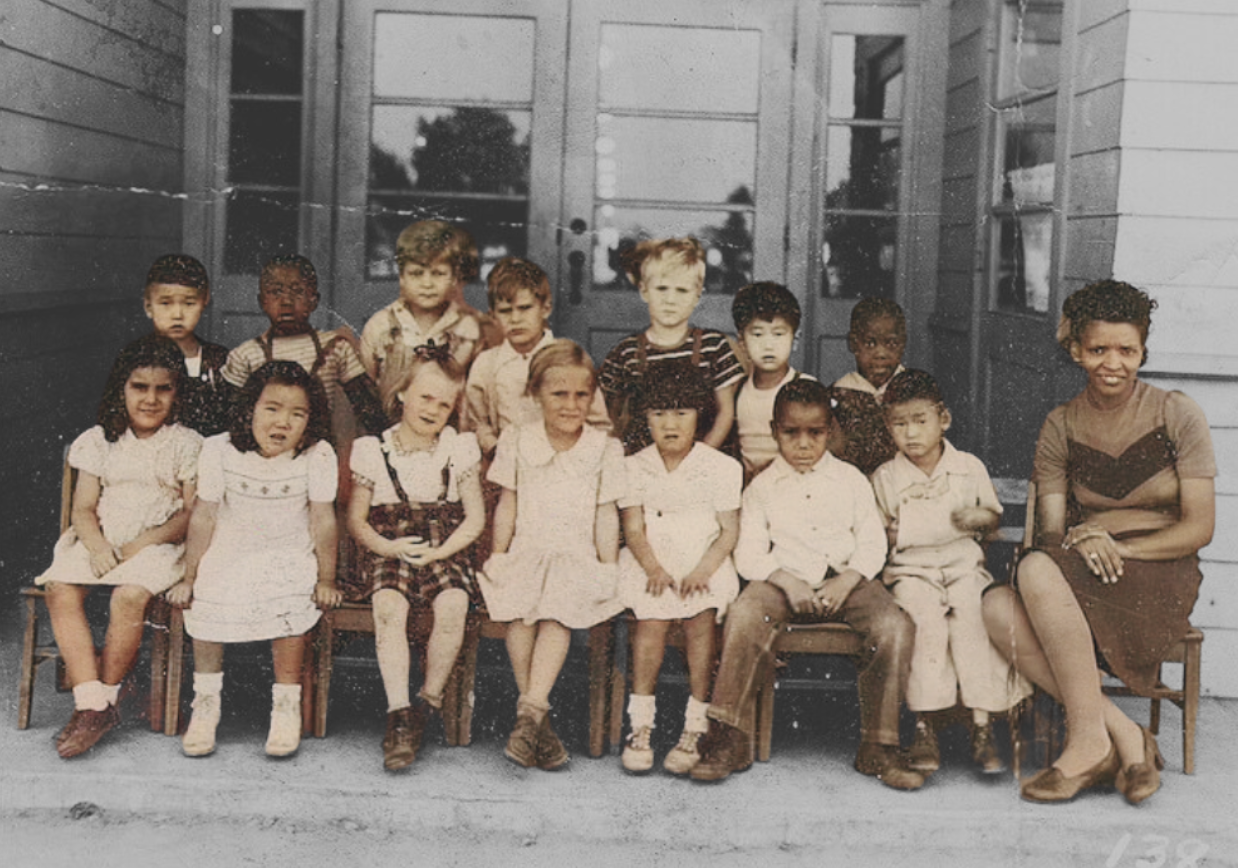
Kindergarten class photo in Vanport, 1945; Courtesy of Norio Saito/Colorization by Vanport Mosaic.
January 1, 2026
Dear Community,
We've been thinking about what happened in December and what it means.
In November, we set our year-end goal at $5,000, half of what might seem obvious for closing our tenth year, because 2025 has already asked enough of everyone.
You helped us reach it by December 18th. Two weeks early.
We didn't expect more. But you kept showing up, with $10, $5,000, and everything in between. Your notes moved us to tear, and reminded us why this work matters.
Douglas and Joyce gave in memory of Izumi Oyama, who lived in Vanport, one of the few places where Japanese Americans could live after being released from WWII-era American concentration camps. Izumi was among those who died in the 1948 flood. (Learn about her through the words of her son, Albert Oyama, in this short video from our oral history collection.)
June gave (twice!) in memory of her mother, Teruko, who passed this summer at 105, and "who throughout her life in Portland enjoyed being involved in multi-ethnic connections." June’s gift now sustains our ongoing oral history interviews, a program her mother would have loved.
Mr. and Ms. Hadley, Vanport survivors, wrote, “It is important to share our past to the new generation and inspire them to learn from our history.”
Mae sent a generous gift with a simple note: "Thank you for the important work you do :)
Lisa discovered Vanport Mosaic nine years ago at one of our screenings, just a month after she moved to Portland. She is still with us today.
Amanda set up a monthly gift and wrote, “Keep up the important work. It’s more important than ever.” (Many thanks to those of you who became recurring donors! Knowing that we can count on your steady support, month after month, helps us plan our programs especially in a time of growing uncertainty around public funding.)
We recognized many names, people who have supported this work through many seasons as it has grown and changed. We also saw new names, people just joining our community. We look forward to learning what brought you here and inspired you.
This work is slow, quiet, and tender. And some days we wonder who it reaches.
Then you show up like this.
Thank you for believing that holding space for memory, grief, and belonging is worth protecting. Thank you for protecting honest history with us. Thank you for walking with us in whatever way you have. We do not take it for granted.
In hope and solidarity,
Laura, and the entire Vanport Mosaic Team