A MEMORY ACTIVISM CO-PRODUCTION
BY VANPORT MOSAIC AND UPSWELL STUDIO
Vanport: Lost City, Living Memories
A place-based audio documentary that blurs the boundaries between a walking tour, a visual essay, and an oral history archive.
2026 GOLD ANTHEM AWARD
Built in 1942 as temporary housing for shipyard workers, Vanport was once Oregon’s second-largest city and the largest WWII federal housing project. At a time of racial segregation, it became home to a multiracial working-class community until the 1948 flood destroyed the city. Vanport was never rebuilt. Today, the site of Oregon's second-largest city is nothing more than a golf course, a raceway, wetlands, and a dog park. Built in less than a year and gone in a day, the “Miracle City” with everything but a future was erased from the map and much of Oregonians’ memory.
Grounded in a decade of community-led memory work in partnership with survivors, the self-guided Vanport Audio Walk brings the “Miracle City” back to the landscape through the voices of those who called it home.

~80 minutes. Take it in one walk or chapter by chapter
How to experience it
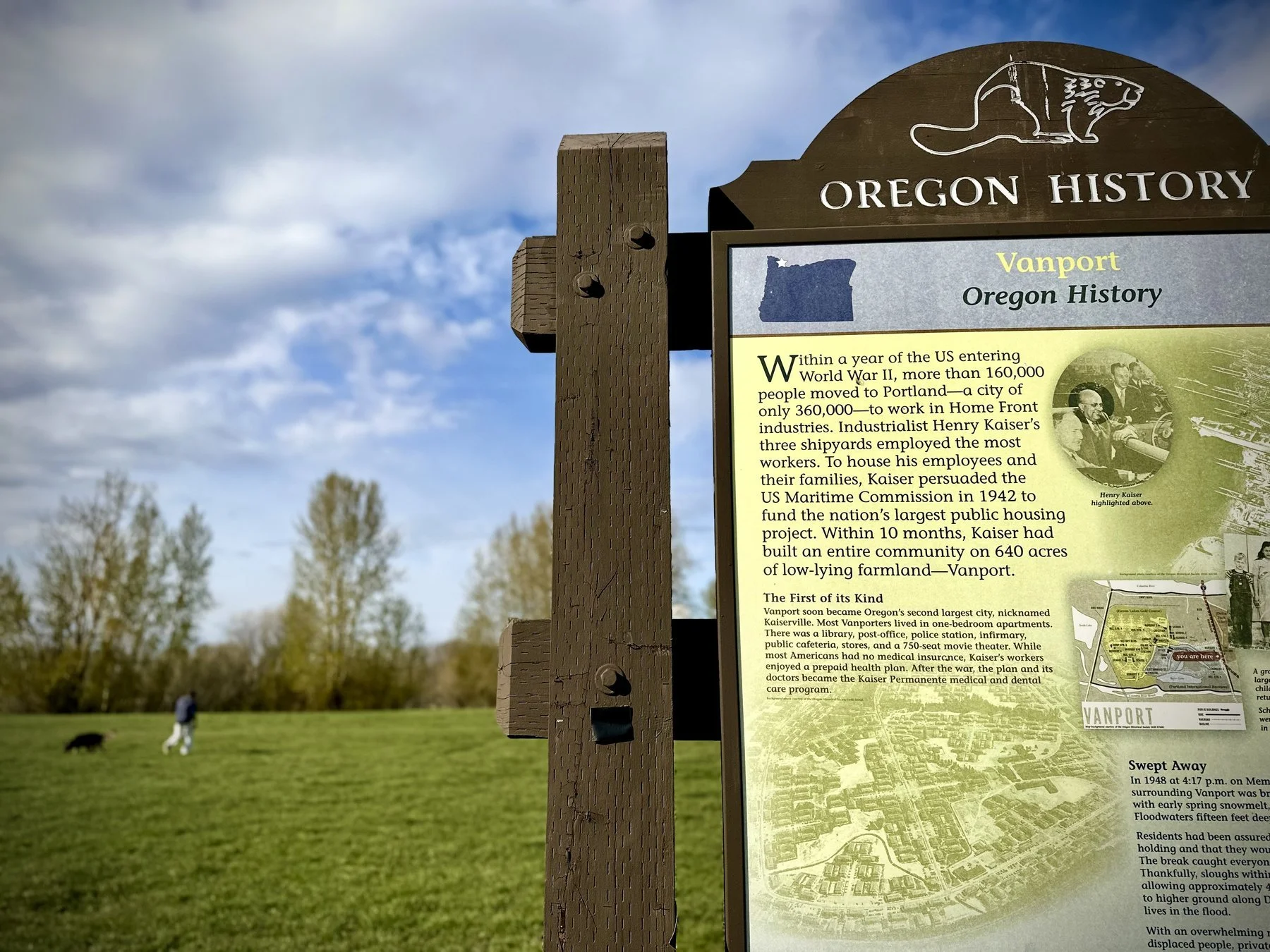
On the land. Start at the historic marker in the West Delta Park parking lot, near the dog park. GPS: 1809 N Broadacre Rd, Portland, OR 97217.
From anywhere. The same link opens the full audio documentary, with photographs, maps, and voices from the archive.
How to access it
Open the link on your phone. Any browser. No app, no account.
Bring headphones. Load the walk before you arrive if service is spotty.
Start anytime. Paved, accessible paths. MAX Yellow Line to Delta Park.
“The houses are not there, but the place is still there, and it is Vanport.”
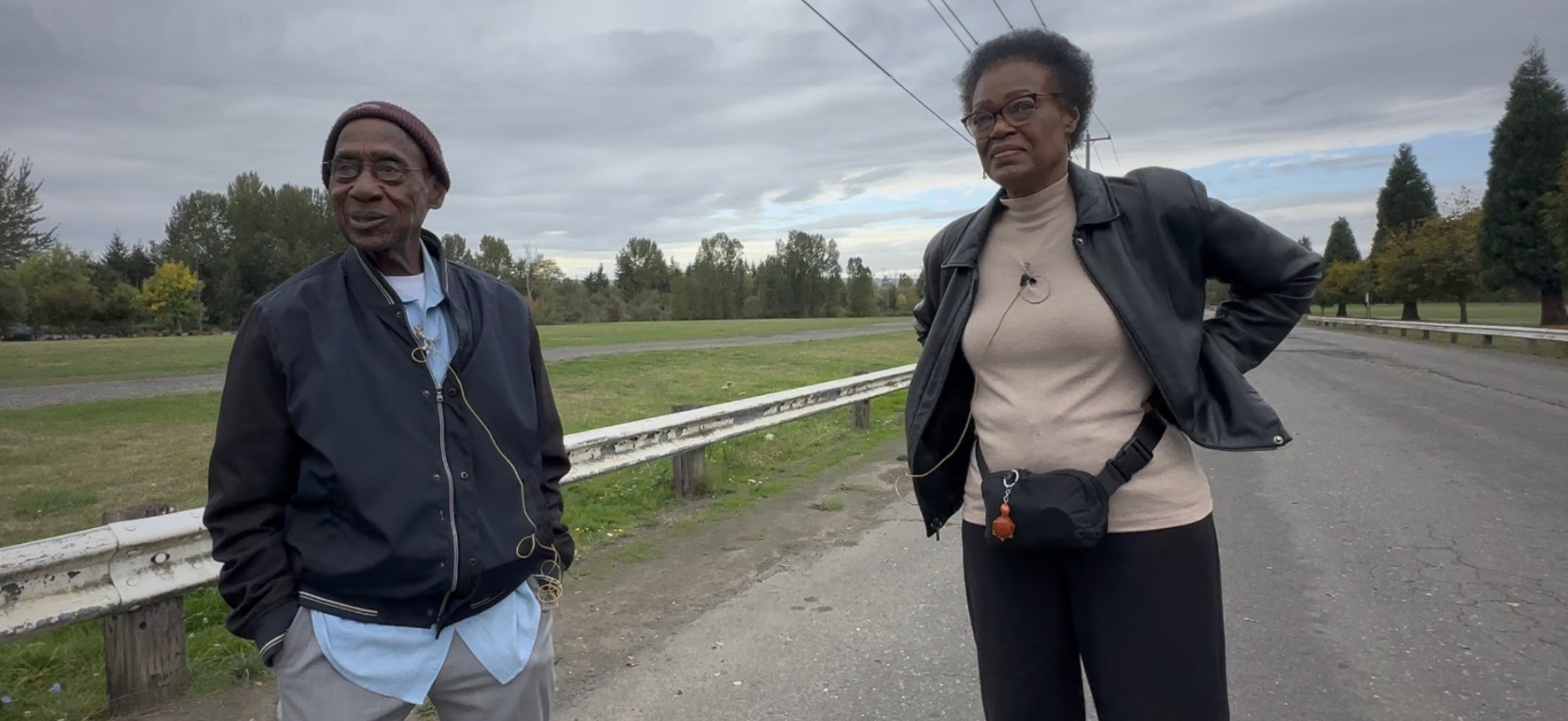
Ed Washington and LaVeta Gilmore Jones at Delta Park. 30 seconds, with captions.
“So, that is my wish: that people know that we were here. That we continue to be here. That we thrive.”
HOW TO EXPERIENCE LOST CITY, LIVING MEMORIES
On site or online
On your phone: an audio walk
On mobile devices, it functions primarily as an audio walk. At the heart of the project is an intergenerational conversation between Vanport survivor Ed Washington and descendant LaVeta Gilmore Jones, as they traverse the land where Vanport once stood. Their voices guide listeners through stories of childhood, family, labor, race, solidarity, play, and loss, stories punctuated by voices of survivors, descendants, and community members.
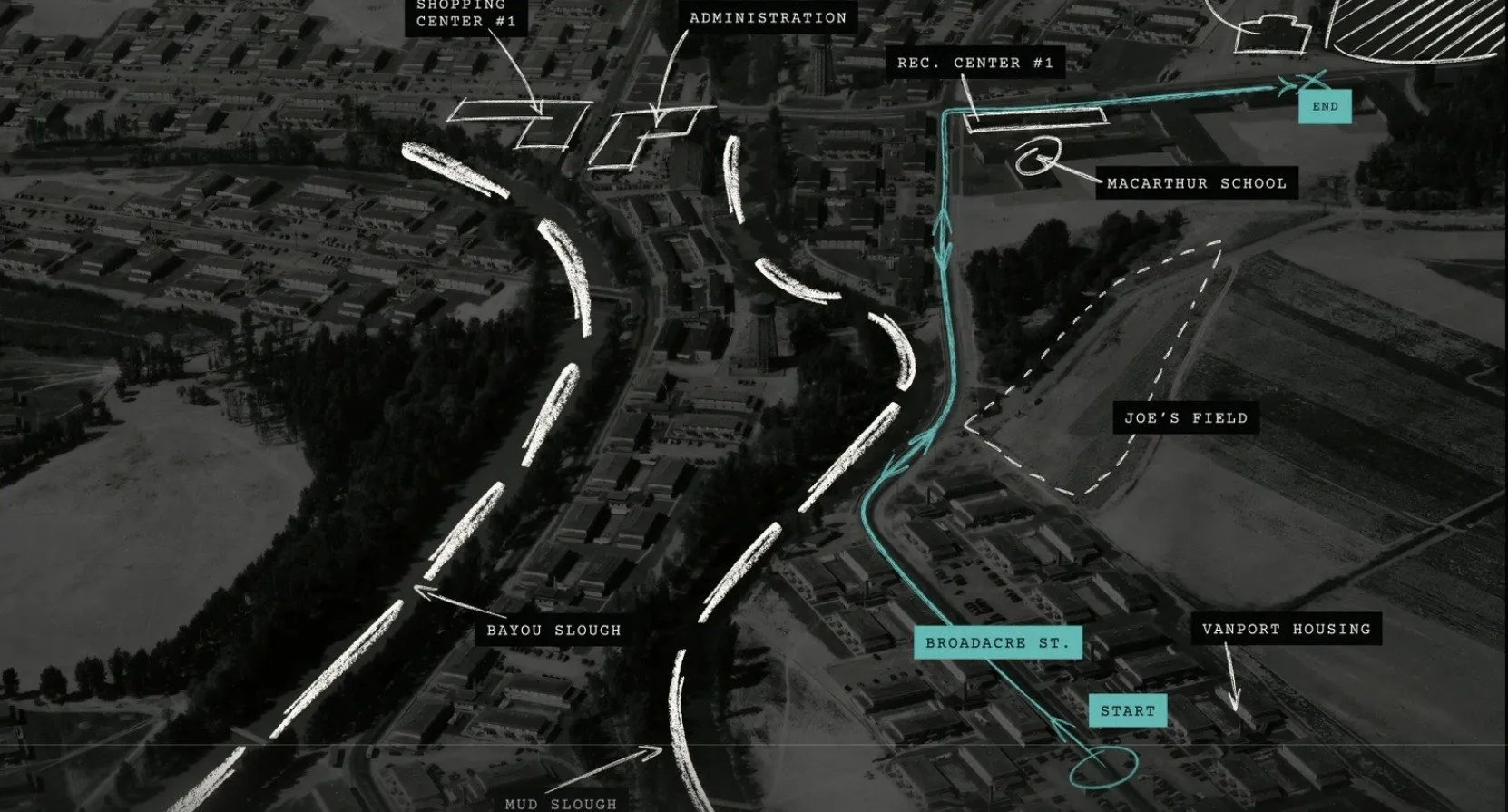
On a computer: the documentary, with a visual essay
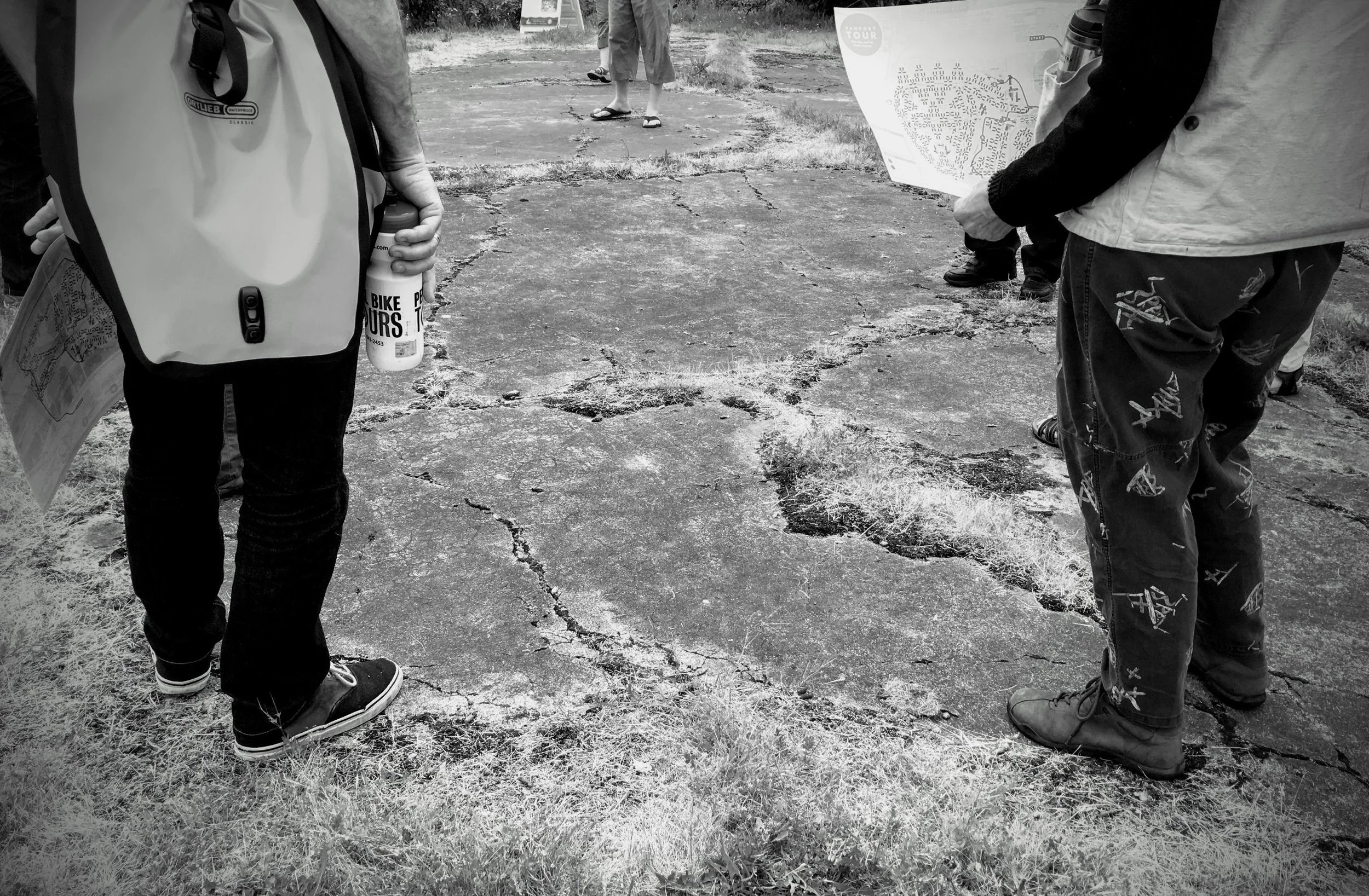
On desktop, the audio documentary stays at the center. Around it, the project expands into a visual editorial essay that juxtaposes archival photographs, maps, and documents with present-day photography of places where little physical evidence remains. Images of absence and fragments of the historical record are brought into dialogue, creating a reflection on memory, presence, and the ways landscapes continue to hold traces of the past.
THE HISTORY
A city with everything but a future
Vanport was a temporary city built in 1942 between Vancouver, WA, and Portland, OR, on traditional village sites of the Multnomah, Kathlamet, Clackamas, Chinook, Tualatin Kalapuya, Molalla, and many other Indigenous Tribes who made their homes along the Columbia River. It was built by industrialist Henry J. Kaiser to house the thousands of people pouring into Portland to work in his shipyards. At its peak, it was the largest World War II federal housing project in the United States and the second largest city in Oregon.
In a state founded on the unceded traditional lands of the many indigenous Tribes and with a constitution that initially made it illegal for Black people to live or own property within its borders, Vanport provided housing to a multicultural and multiracial community.
In its short history, from 1942 to 1948, Vanport drew national attention and conflicting opinions. For over 40,000 shipyard workers and their families, Vanport was simply their home. They came from all corners of the country to contribute to the war effort and seek a better life, forming an instant community in a city with everything but a future.
On May 30, 1948, a flood destroyed the entire city, killing at least 15 people and forcing Portland to open its doors to thousands of local refugees. Many stayed, forever changing our region’s social, economic, and political fabric.
Vanport was erased in a single day, but its legacy continues.
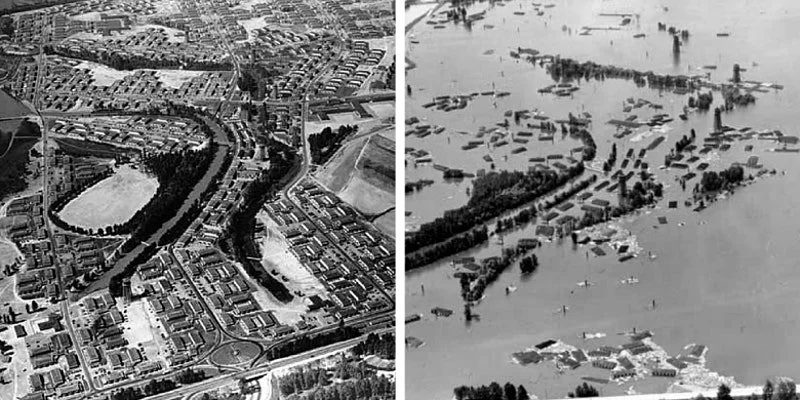
Oregon's Katrina
The 1948 flood is often called “Oregon's Katrina.” Similarly to the more recent Hurricane Katrina in New Orleans, the response to the disaster was marked by Portland’s lack of preparedness, inadequate infrastructure, and a failure to prioritize the needs of vulnerable citizens.
Vanport was never rebuilt. Today, the site of Oregon's second-largest city is nothing more than a golf course, a raceway, wetlands, and a dog park. Built in less than a year and gone in a day, the “Miracle City” with everything but a future was erased from the map and much of Oregonians’ memory.
Remembering is resistance
Since 2014, Vanport Mosaic has collected oral histories with Vanport former residents and survivors of the 1948 flood. We continue to gather around these stories in multi-generational circles to harvest lessons of hope, resistance, and resilience for these challenging times.
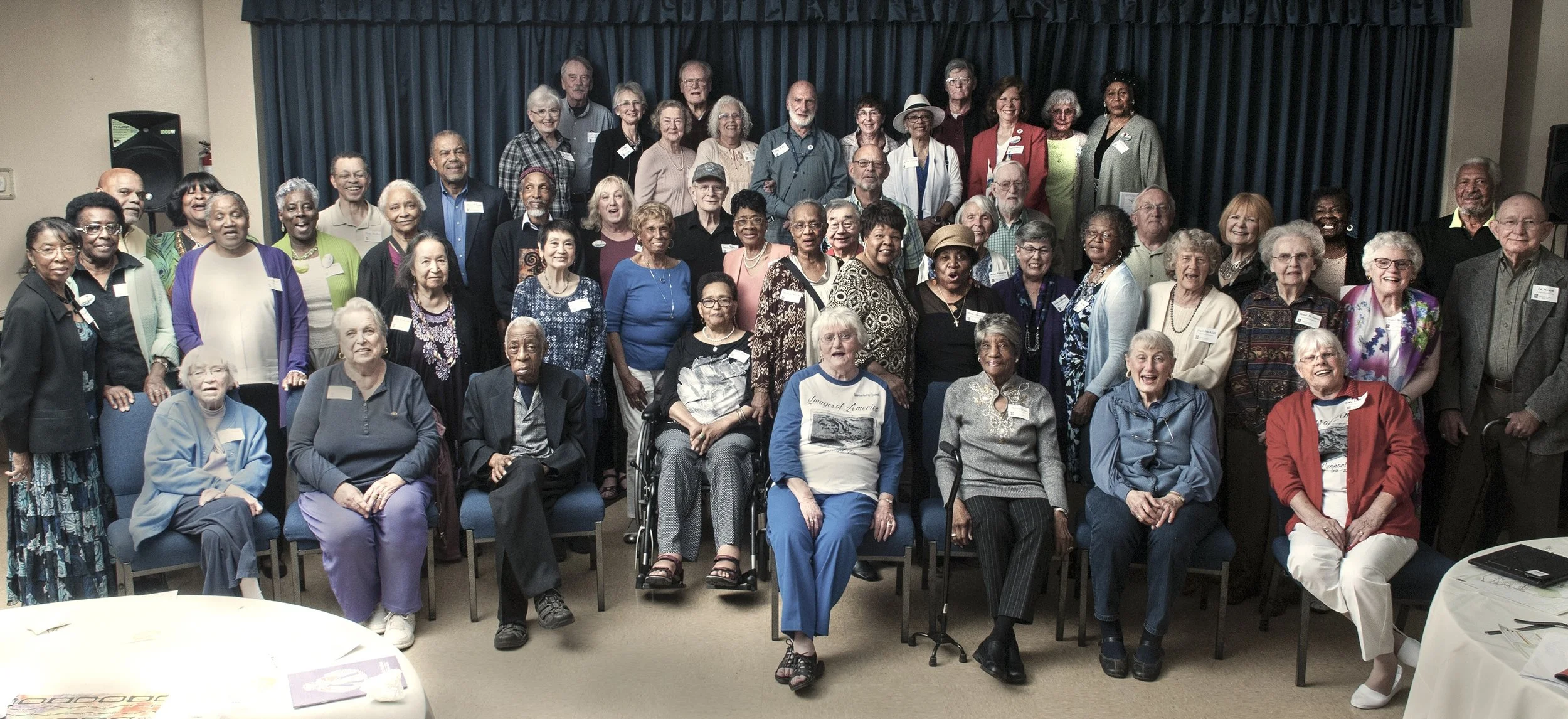
Vanport former residents and flood survivors at the 2018 annual reunion
RECOGNITION
2026 GOLD ANTHEM AWARD WINNER
Belonging and Inclusion - Local Community Engagement category.
The 6th Annual Anthem Awards, presented by The Webby Awards and judged by the International Academy of Digital Arts and Sciences, received more than 2,500 submissions from 43 countries worldwide, the organization's largest competition to date. The Anthem Awards recognize purpose-driven work that is setting the standard for social impact around the world.
“Thank you for honoring us when the world is trying to erase us. You are making us visible.”
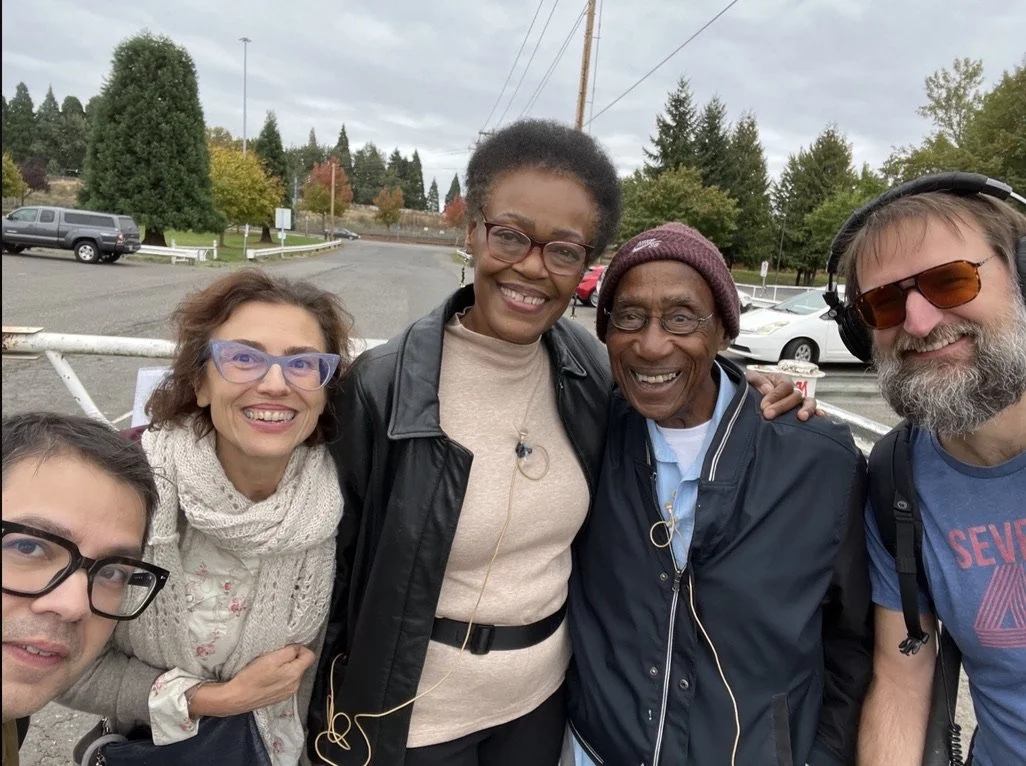
Armando Manalo, Laura Lo Forti, LaVeta Gilmore Jones, Ed Washington, and Erik Golts.
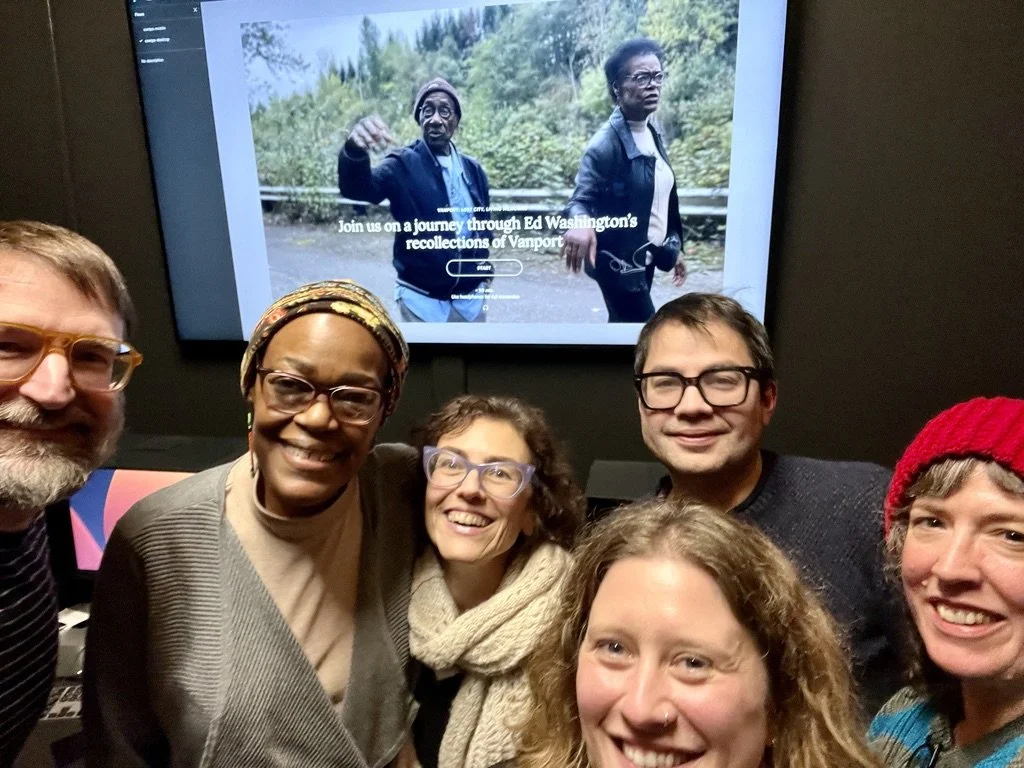
Erik Golts, LaVeta Gilmore Jones, Laura Lo Forti, Armando Manalo, Kelly Bosworth, and Greta Smith, with the opening screen of the walk.
CREDITS
Conceived and directed by Laura Lo Forti/Vanport Mosaic; co-created with Armando Manalo/Upswell.
Co-produced by Vanport Mosaic and Upswell.
Production team:
Vanport Mosaic: Greta Smith, Kelly Bosworth
Upswell: Erik Golts, Tom Tian, Kieran Lynn
Special thanks to Walking Cinema and audio producer Megan Hattie for their contributions to the project's evolution.
IN GRATITUDE TO OUR MEMORY-KEEPERS
This project is made possible through the generosity of Vanport survivors, descendants, and their families. Their stories continue to shape how this history is remembered today.
Special thanks to Vanport survivor Ed Washington and descendant LaVeta Gilmore Jones, whose dialogue serves as the foundation of the audio documentary.
This experience features the voices and memories of Vanport flood survivors and descendants, selected from the Vanport Mosaic community archive, including Luther Avery, Frank Blanchard, Evelyn Bolme, Velynn Brown, Clifford Cole, Harold Culbertson, Anna Donner, Alta High Elk, Holly Elkins, Marion Endicott, Ruby Fandrich, Doris Frazier, Beatrice Gilmore, Barbara A. Green, Hurtis Hadley, Karen McCoy Halverson, Kathleen Hamburg, OB Hill, Carolyn Hinton, Laura Ann Howard, Richard Hunter, Ben Johnson, Betty Jones, Becky Kaiser, Shirley Keppinger, Bill Lemman, Ed Maresh, Bob Matsunaga, Shirley Minor, Janice Okamoto, Albert Oyama, Herschel Parker, Dean Popke, Barbara Raucher, Wallace Sanders, Lurlene Shamsud-Din, Will Stacey, Joyce Stockdill, Mariah Taylor, Louise Trotti, Patricia Walker, Jackie Winters, and Norman Zelle.
SPECIAL THANKS
Andrew DeVigal, Angie Morrill, Chisao Hata, Eliza Canty-Jones, Heather McCafee, Katrine Barber, Kim Moreland, Laura John, Lynette DeSilva, Matthew Kerrigan, Milo Reed, Naomi Pierce, Norman Gholson, Peter Marsh, Shalanda Sims, Sunshine Dixon, Susan Barthel, Tanya March, Terri Johnson, Thomas Robinson, Tim Hecox, Toni Hill, Zita Podani.
In memory of Henk Pander, Sen. Jackie Winters, James Harrison, Joyce Nelson, Judy Yeckell, PC Peri, and Raymond Burrell.
PROJECT FUNDERS
This project was supported in part by a grant from the National Historical Publications and Records Commission (NHPRC), National Archives and Records Administration, and by a grant from the Oregon Heritage Commission, Oregon Parks and Recreation Department.

SUSTAINED BY OUR COMMUNITY
Our ongoing memory activism is made possible by our generous individual donors.